Birdsong at Dawn or After Rain? Choose the Better Listening Moment
Birdsong at dawn or after rain: choose a comfortable listening moment and record calls, pauses and sounds clearly without guessing at species.
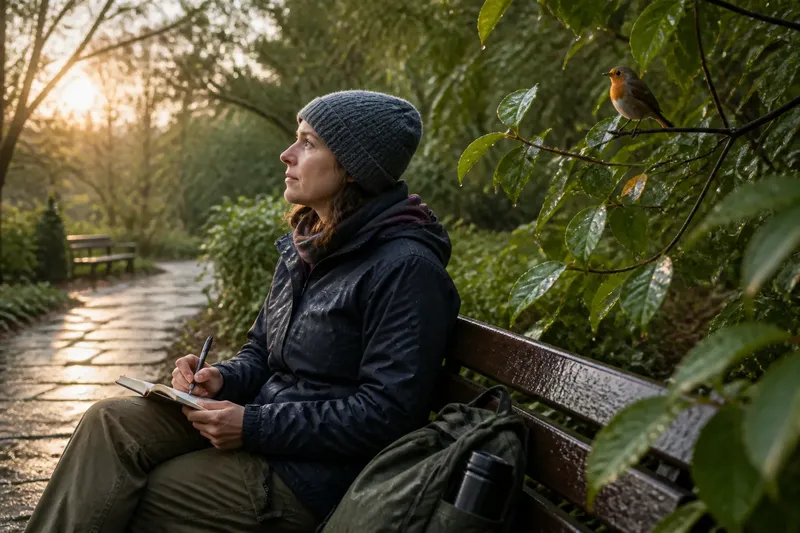
The most common mistake in listening for birdsong is treating a quiet spell as a failed outing. At dawn, a cold start or an inconveniently early alarm can make attention fade; after rain, dripping branches and passing traffic can mask the calls. Birdsong at dawn or after rain can both reward a patient listener, but the better moment is the one when you can pause comfortably and notice what is actually audible.
You do not need to identify a single bird to make a useful record. Note the sound’s shape, where it came from, how it changed and what else was happening. That turns listening into close observation rather than a guessing game, and it gives you a fair basis for comparing two very different moments.
Choose a comfortable time
Dawn often brings a distinct stretch of bird activity while the surroundings are still relatively quiet. Yet the exact experience depends on the place, season, weather and your own routine. A dawn visit only helps if you arrive alert enough to listen. If getting out early means rushing, shivering or worrying about the journey home, try a later morning instead.
The pause after rain has its own appeal. Water falling from leaves may continue after the shower ends, and birds may call from cover or return to exposed perches. A brief lull between showers can be easier to fit into an ordinary day, though the surrounding sounds may be less hushed than they first seem.
Choose a familiar, accessible place: a garden, a public path or a bench in a local green space. A sheltered spot near trees may suit a windy morning; an open path may be more comfortable after rain if branches are still dripping. Wear layers you can adjust, bring a waterproof outer layer when needed, and choose footwear suited to the ground. Comfort is not a bonus. It is what lets you stay still long enough to hear changes.
Before setting off, decide how long you can listen without strain. A short, attentive pause is more useful than an ambitious outing spent checking the time. If dawn does not suit your sleep or responsibilities, there is no need to force it: compare a calm morning later in the day with a post-rain pause when one happens naturally.
When sounds seem absent
If you hear very little at dawn, the cause may be your setting rather than a lack of birds. Wind through foliage, nearby road noise, a running fan or people beginning their day can cover softer calls. You may also be standing beside a broad, noisy space when a sheltered corner would make the same sounds easier to notice.
Try waiting without walking for a little while. Keep your eyes relaxed and listen in different directions rather than staring into one patch of branches. A repeated note may become apparent only after a pause, especially when you stop making small sounds yourself. If background noise remains strong, move to a quieter position only if the route is safe and accessible.
After rain, water is a common culprit. Drips striking a metal awning, puddles or broad leaves can sound like small calls, while a steady trickle can blur the gaps between bird notes. Listen for whether a sound repeats with a similar pitch or rhythm, but do not assume that a particular pattern belongs to a bird. Record the uncertain sound as uncertain.
Imagine you stop beside a garden hedge after a shower and hear several sharp sounds. A downpipe is still ticking, and one note comes from above the hedge at irregular intervals. In your notes, you could separate the steady ticking from the higher, intermittent sound, then wait to see whether the latter changes or pauses. The useful result is a clearer description, not a confident name.
When the weather distracts
A cold, damp dawn can pull your attention towards your hands and feet. If you keep shifting or rubbing your sleeves, you will miss softer sounds. Choose a sheltered place, wear clothing that stays comfortable while you are still, and keep a warm layer within easy reach. There is little value in staying out once you are uncomfortable; you can try another day or listen from a suitable indoor spot.
After rain, slippery paths, muddy edges and water falling from trees can make a favourite listening point less pleasant. Stay on paths, avoid standing beneath unstable branches and do not cross water or muddy ground to get closer to a sound. A bird heard from a safe, ordinary distance is enough for this exercise.
Not every weather detail deserves an elaborate note. You do not need to measure rainfall, track every passing cloud or buy recording equipment before you begin. A brief description such as “light breeze, leaves dripping” gives useful context without turning a quiet pause into a project.
Record what you hear
A simple notebook or notes app is enough. Write down the time in ordinary terms, the place, whether it is dawn or after rain, and the conditions that affected listening. Then describe the sounds in plain language: high or low, clear or muffled, single or repeated, near or distant. Add pauses, changes in rhythm and any background noise.
- Write down what you heard before checking a bird guide or audio app.
- Use comparisons such as “short whistle” or “rough, repeated call” rather than a species name.
- Separate sounds that seem to come from different directions.
- Mark uncertain impressions with a question mark or the word “unclear”.
- Note what changed when rain stopped, wind eased or traffic passed.
These details let you compare listening moments without pretending they were identical. A dawn entry might say that a few thin calls carried across a still garden, while a post-rain entry notes a nearby repeated sound partly masked by dripping leaves. Both records are useful even if the birds remain unidentified.
If you use a phone recording, make a short clip from a place where you can stand comfortably, and avoid speaking over the sound. Keep the phone dry and secure; a recording is optional, not a reason to handle equipment in poor conditions. When replaying it, describe what is audible before seeking an identification. Familiar recordings can help you learn, but a brief sound in a noisy setting may not support a reliable guess.
Why does dawn sound different?
Is dawn always the quieter choice?
No. A sheltered dawn may feel still, but wind, traffic or household noise can dominate in one location. Choose the place and time that let you listen without strain rather than assuming every dawn will be silent.
Does rain make birds stop calling?
There is no single pattern to expect from every bird or place. During rain, calls may be harder to hear; in a pause afterwards, you may notice sounds from birds, dripping water and other activity together.
How can I describe a call without naming it?
Note its pitch, length, repetition, rhythm and apparent direction. “Two low notes, a pause, then a thin rising whistle” is more honest and useful than a species guess you cannot support.
Should I use an identification app?
You can use one as a prompt for further listening, but treat its suggestion as uncertain, especially when the clip includes traffic, water or overlapping calls. Keep your original description so the record remains grounded in what you heard.
Make a fair comparison
To compare dawn with the pause after rain, keep the notes modest and consistent. Choose the same accessible spot when practical, and write down the conditions that differed: wind, nearby activity, wet foliage or the time of day. Do not expect one visit to settle which moment is better. The comparison is about your listening experience, not a ranking of bird behaviour.
Say you have a quiet garden and a nearby path. On a calm morning, you note a few distant whistles and long gaps. After a shower another day, you hear sharper calls nearby, but dripping from the hedge interrupts them. Your notes show that dawn suited distant sounds while the post-rain pause made nearby calls easier to notice; they do not prove that the same birds were present on both occasions.
Birdsong at dawn or after rain is most rewarding when the plan fits your day and the record stays close to your senses. Pick a comfortable place, let the sound settle, and write down the qualities you can hear. If you leave with one clear description and a reason to listen again, the pause has done its job.